
Shares of Parle Industries Ltd surged by 5% after Prime Minister Narendra Modi gifted Melody toffees to Italian Prime Minister Giorgia Meloni.

A year after test-marketing its traditional snacks in the northern states of Uttar Pradesh and Madhya Pradesh, Mumbai-based Parle Products is set to launch the product in the west and the north of the country.

Fast-moving consumer goods (FMCG) companies in India are committed to maintaining current prices through the festive season, despite facing increased commodity costs and geopolitical disruptions. This strategy aims to protect consumer demand and sustain volume growth, even as margins remain under pressure.

When asked whether there was any information about Amol, Chauhan said, "All we know is that the plane has gone missing. We have not heard anything else yet."

The Maharashtra Food and Drug Administration (FDA) has suspended the licences of popular Mumbai restaurant Cafe Mondegar and three other food establishments due to serious food safety and hygiene violations. This action is part of an intensified crackdown by the FDA, which also saw inspections of 38 establishments, seizure of substandard food products worth over Rs 15 lakh, and action against banned gutkha products totalling Rs 1.35 crore in seized goods and vehicles across Maharashtra.

Kiren Rijiju has strongly criticised the Congress for allegedly 'unfairly disrupting' the recent monsoon session.

Do you know suddenly why India's toffees are the toast of the town?

Fast-moving consumer goods (FMCG) companies are closely monitoring crude oil prices and considering low single-digit price increases, while consumer durables firms have already begun passing on significant price hikes to consumers due to rising input costs exacerbated by the West Asia conflict.

Shah Rukh Khan's King has been forced to relocate its April shooting schedule from the Gulf to Mumbai.
With lower GST rates taking effect, fast-moving consumer goods players face challenges in setting reduced prices for their products in round figures, but expect the magical price points to be restored within two months.

Biscuit-maker Parle Products aims to sensitise 80 lakh (8 million) people across India on reducing wastage of plastic through a plantation drive to go green, which begins next month.
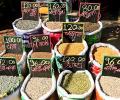
Parle is taking one step at a time as it moves ahead in the pulse biz. Carpet bombing will not work. The company goes slow with Fresh Harvest dal rollout.

The BJP has accused TMC MP Kirti Azad of vaping in the Lok Sabha, leading to a political spat. TMC demands the release of full video footage before commenting.

Opposition parties in India are demanding a discussion on the Special Intensive Revision (SIR) of electoral rolls and national security in the upcoming Winter Session of Parliament. They raised concerns about federalism, national security, and the purity of voter lists during an all-party meeting.

The home-grown biscuit brand looks to get inside the customer's mind as it steps outside the boundaries of its mass-market identity
Fast-moving consumer goods (FMCG) sales in rural areas witnessed a sequential recovery in the latter half of December, according to data by retail intelligence firm Bizom. Also, demand witnessed in the previous month compared to November was higher from tier-3 cities than mega cities. Overall demand from rural areas declined 0.2 per cent on a month-on-month basis in December while it was down 17 per cent in November, according to Bizom's data.

The Monsoon session of Parliament concluded after facing disruptions and protests over the revision of electoral rolls in Bihar. Despite the disruptions, the government managed to pass key legislations.

The disqualification of wrestler Vinesh Phogat in the Olympics after being found overweight before the final bout also saw the government and Opposition come to blows in Parliament.
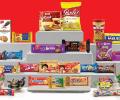
Indian consumers are likely to get respite from rising prices just before the festival season. Some consumer companies, including automakers, have indicated that they are planning to pause price hikes just before demand picks up in August, while keeping a close eye on volatile raw material prices.
For five decades now, Bourbon and Britannia have gone hand in hand. The Wadia family-controlled company lords over 70 per cent of the popular biscuit category. The rest of the market is with about half a dozen other brands.

The applications range from disaster recovery to predicting demand and understanding customer choices using artificial intelligence.

The company, after witnessing a prolonged dispute with striking workers over several issues, has received the Karnataka government's approval to close the factory.

Demand for fast-moving consumer goods (FMCG) fell in April owing to lower stocking by kiranas, according to the data from Bizom. Kiranas stocked lower quantities in April as they resorted to heavy stocking in March. Sales in value terms were down 8.4 per cent in the month as against the same period last year while on a month-on-month basis, they declined 17 per cent.

While there was a 6 to 7 per cent increase in volume compared to last year in the first few days of the month which coincided with festivals, a large part of the demand is yet to hit the market.

The festival season has already begun in the west and south of India with Ganesh Chaturthi and Onam, respectively, and consumer companies are witnessing a pick-up in sales compared to pre-Covid levels. Retailers, fast-moving consumer goods (FMCG) and consumer durables companies expect their sales to grow in double digits this festival season compared to pre-pandemic times, as there are no curbs on movement now. Adani Wilmar expects sales volume to be higher by 15-20 per cent as rural India has largely witnessed good monsoon rains, and employment has picked up in urban areas.

Top players, ITC, Britannia and Parle Products, are taking three different routes to compete at the premium end. But soon all three would get on the same path.

Higher inflation has again become a matter of concern for fast-moving consumer goods (FMCG) companies. After prices of commodities like sugar and wheat moved higher and stabilised at those levels, the crude oil too surged, adding to FMCG firms' worries. Besides, a dry spell in August in the ongoing monsoon season impacted rural demand.
Expect fast-moving consumer goods makers (FMCG) to raise prices again next month owing to raw materials, transport, labour and packaging material costs remaining high or becoming even costlier. Whether it is packaged wheat flour and basmati rice or biscuits and shampoos, these products will become 2-10 per cent more expensive. Adani Wilmar will hike the price of its packaged wheat flour by 5-8 per cent and of its basmati rice by 8-10 per cent next month.

Parliamentary proceedings were disrupted for the third consecutive day in the Winter Session as opposition parties continued their protests over the Adani issue and violence in Manipur and Sambhal. Both the Lok Sabha and the Rajya Sabha were adjourned within minutes of convening, despite appeals from the Chair to engage in productive dialogue and refrain from disruption. The opposition members raised slogans demanding action against the perpetrators of violence in Sambhal, and sought discussions on allegations of irregularities against the Adani Group and the violence in Manipur.

Consumer companies have started taking orders via phone calls and are also pushing retailers to order through their B2B applications.

The Budget proposals are expected to boost the fortunes of consumer goods and fast-moving consumer goods companies, which have been struggling with poor consumer demand for more than a year. The Budget announcements, such as the increase in standard deduction by Rs 25,000 for income-tax payers and slab revisions, will put more money in their hands, boosting consumer demand. Private consumption is also likely to benefit from a new scheme to offer internships to 10 million youths in the country's top 500 companies.
Parle Products Pvt Ltd announced the fourth year of 'Parle Saraswati Vandana - 2005', an initiative to help children showcase talent during 'Saraswati puja'.

With Onam and Raksha Bandhan just around the corner, the festival season is ready to kick off in full swing. As people embrace the celebratory spirit, companies anticipate a surge in sales this year. Consumer durables firms are expecting strong growth of 40-50 per cent in the premium segment during the upcoming season. Appliance makers also foresee increased demand for cooling appliances - refrigerators and air conditioners - which were impacted by unseasonal rainfall.
FMCG firms such as ITC, Parle Products, Marico, Emami, PepsiCo India and CG Corp Global on Wednesday assured uninterrupted supply of their products based on the learnings from the last year's lockdown, even as surge in COVID-19 cases in India forced Maharashtra to declare a 15-day curfew while other states also imposing various restrictions.

With theatres remaining shut, new releases are making a beeline for OTT platforms, and companies are forging tie-ups to reach out to the target audience.

Maaza, a desi mango fruit-based drink owned by Coca-Cola, has touched the milestone of becoming a billion-dollar brand in 2024, its Chairman and CEO James Quincey has said.
'The focus on easier access and faster delivery is creating a new consumption pattern that allows consumers to satisfy their last-minute cravings and restock essentials at the click of a button.'

From paints to apparel and lifestyle majors, brewers, distillers and fragrance makers have stepped into the market, even as the frontline companies including FMCG players, pharma and healthcare majors were the first to seize the opportunity created by Covid-19.

Lower income groups earning less than Rs 100,000 a year are yet to recover as are those earning between Rs 100,000 and Rs 200,000.

Chief executives in the real estate, consumer products, automobiles, construction, and textile sectors said they were all expecting workers to re-join in the next 45-60 days, which would help them ramp-up production from July.
